The Triple-AgonistRewriting Metabolic Research
Retatrutide is the first triple-agonist peptide (GIP/GLP-1/Glucagon) to reach Phase 2 trials. Published data in the New England Journal of Medicine showed up to 24.2% body weight reduction at 48 weeks.
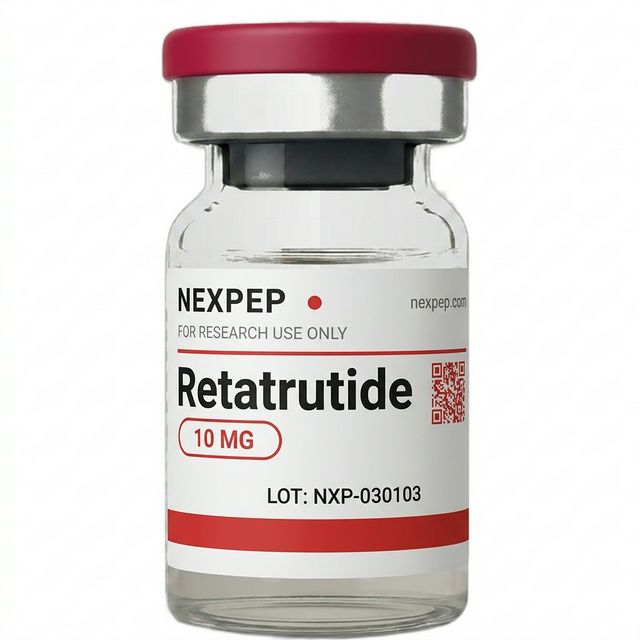
For Research Use Only
Why Triple Agonism Matters
Three distinct receptor pathways working simultaneously — a first in published metabolic research.
GLP-1 — Appetite
GLP-1 receptor activation reduces appetite and food intake through central nervous system signaling. This is the same pathway used by semaglutide and tirzepatide — but retatrutide adds two more receptors.
GIP — Insulin
Glucose-dependent insulinotropic polypeptide enhances insulin secretion and improves glucose metabolism. The dual GIP/GLP-1 mechanism (like tirzepatide) showed superior outcomes vs GLP-1 alone.
Glucagon — Energy
The third receptor — glucagon — is what makes retatrutide unique. Glucagon receptor activation increases energy expenditure and promotes hepatic fat oxidation. This is the "fat-burning" pathway the others lack.
NEJM Phase 2 Results
Published in the New England Journal of Medicine — the gold standard of clinical research journals.
Published Research
Peer-reviewed studies from PubMed. Every PMID is linked so you can verify the data yourself.
Retatrutide Phase 2 Trial (NEJM)
338 adults with obesity. Participants receiving the highest dose achieved up to 24.2% body weight reduction at 48 weeks — the largest weight loss ever reported for an investigational anti-obesity medication at that time.
PMID: 37385275 →Retatrutide in Type 2 Diabetes
Phase 2 trial in adults with T2D. HbA1c reductions of up to 2.02 percentage points, with significant body weight reductions across all dose groups compared to placebo.
PMID: 37840095 →Retatrutide and MASLD (Fatty Liver)
Sub-analysis showed ≥80% of participants on retatrutide achieved ≥5% liver fat reduction. Implications for metabolic-associated steatotic liver disease (MASLD) research.
PMID: 38598568 →Triple Agonism: GIP/GLP-1/Glucagon
Review of the triple-agonist mechanism. GLP-1 reduces appetite, GIP enhances insulin secretion, and glucagon receptor activation increases energy expenditure — three complementary metabolic pathways.
PMID: 36567476 →Incretin Therapies Beyond Diabetes
Comprehensive review of GLP-1 receptor agonist research expanding beyond glucose control into cardiovascular risk reduction, NASH, and neurodegenerative disease applications.
PMID: 37952076 →Multi-Agonist Peptides in Metabolic Research
Analysis of next-generation multi-receptor agonists. Triple agonists like retatrutide show superior metabolic outcomes compared to single or dual agonists in clinical trials.
PMID: 38276735 →What to Verify Before Sourcing
GLP-1 peptides are the most counterfeited category in the research market. Here's what to check.
Batch-Specific COA
Every batch should have its own certificate of analysis — not a generic PDF. GLP-1 peptides require HPLC purity AND peptide content verification.
99%+ Purity (HPLC)
High-performance liquid chromatography confirming purity. Ask for the actual chromatogram — not just a number on a page.
Accurate Dosing
Retatrutide dosing is measured in milligrams per vial. Verify the net peptide content matches the label claim, not just total lyophilized weight.
Cold Chain Shipping
GLP-1 peptides are temperature-sensitive. Proper lyophilization + cold chain shipping from US facilities ensures potency on arrival.
Comparing GLP Research Sources?
Start with batch documentation, purity verification, and clear research-use positioning before comparing metabolic research compounds.
Guide reader? Use code GUIDE10 for 10% off any order.
For research use only. Not for human consumption.
Want the Full Picture?
Download the complete 165-page research guide covering 14 compounds, mechanisms, handling protocols, and source verification.