The Copper PeptideResearchers Have Studied for 40+ Years
GHK-Cu is one of the most published compounds in skin and collagen research. It's naturally present in human blood plasma — and when reconstituted, it turns a distinctive blue color from its copper binding.
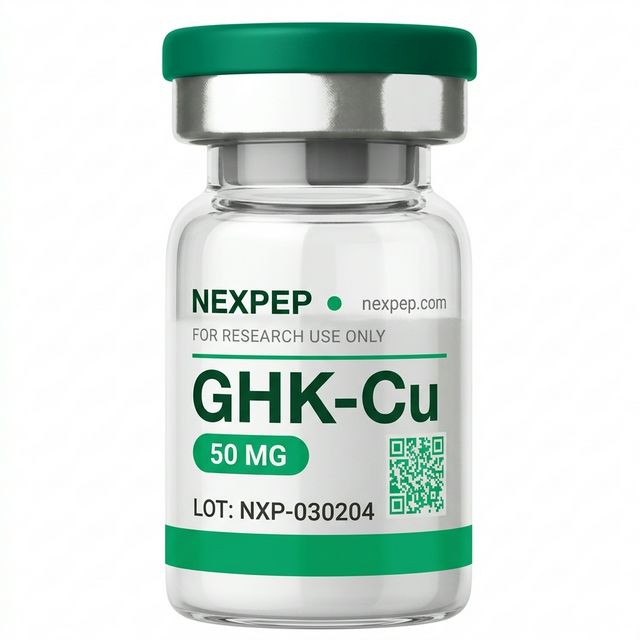
Characteristic Blue-Copper Color
What Is GHK-Cu?
A naturally occurring tripeptide-copper complex found in human plasma, saliva, and urine.
Collagen Synthesis
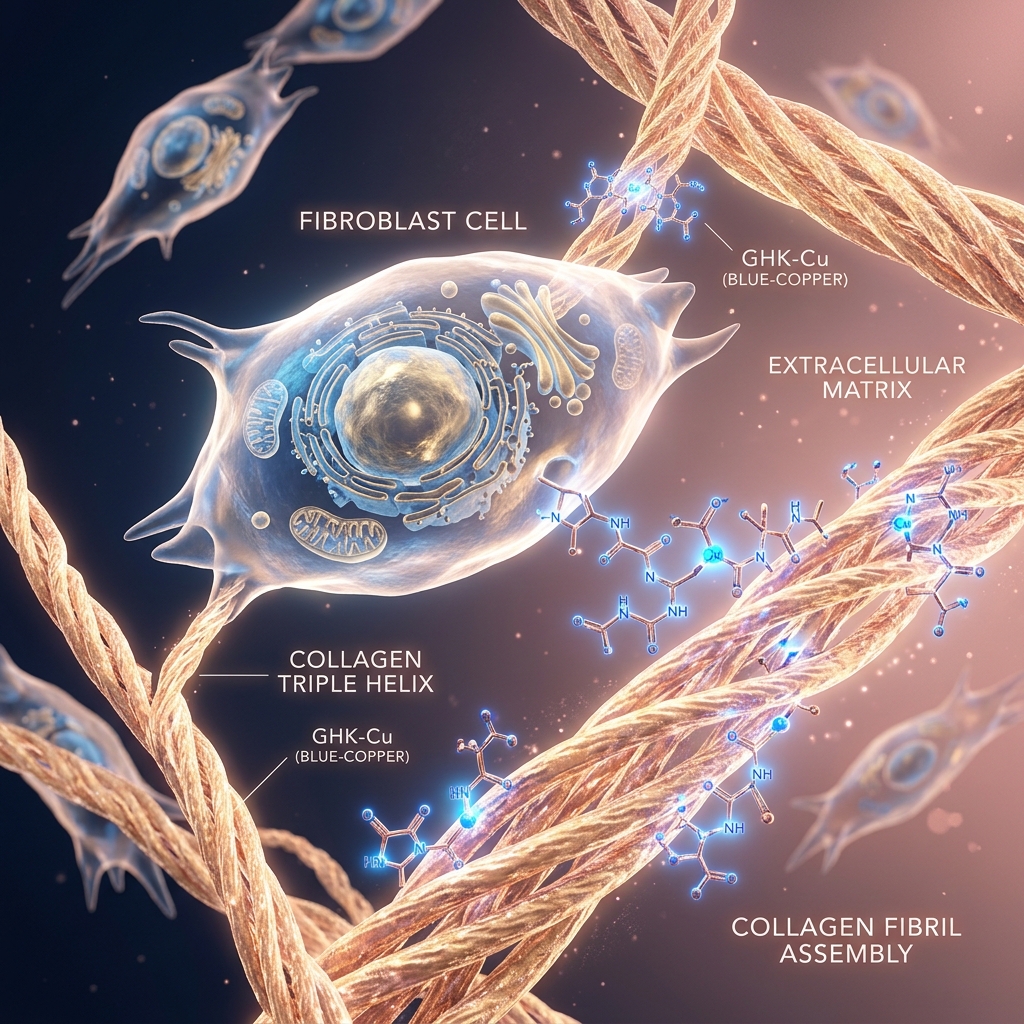
Research demonstrates GHK-Cu stimulates production of collagen types I and III, the primary structural proteins in skin, tendons, and blood vessels. Studies show increased decorin synthesis — essential for proper collagen fibril organization.
Skin Remodeling
40+ years of peer-reviewed research on skin remodeling pathways. GHK-Cu has been shown to modulate expression of 4,000+ genes involved in tissue repair, antioxidant defense, and anti-inflammatory responses.
Hair & Wound Healing
Studies show GHK-Cu promotes hair follicle enlargement and proliferation, prolongs the anagen (growth) phase, and accelerates wound closure through enhanced angiogenesis and increased antioxidant enzyme expression.
Why "Liquid Glow"?
When GHK-Cu is reconstituted with bacteriostatic water, the copper in the complex gives the solution a distinctive blue-teal color. This visual signature — combined with the collagen and skin research — is why the research community nicknamed it "liquid glow." The color is a simple indicator that the copper is properly complexed with the peptide.
Beyond Skincare Trends
While copper peptides appear in many cosmetic products, the research on GHK-Cu as a standalone compound goes far deeper. Published studies document its effects on gene expression, tissue repair signaling, stem cell attraction, and neuroprotective pathways — far beyond what any topical cream can achieve.
Published Research
Peer-reviewed studies spanning four decades. Every PMID is linked so you can verify the data yourself.
GHK-Cu and Collagen Synthesis
GHK-Cu demonstrated significant stimulation of collagen I and III production by fibroblasts. Increased decorin synthesis, a proteoglycan essential for collagen fibril organization.
PMID: 25482091 →GHK-Cu in Skin Remodeling
Comprehensive review of GHK-Cu's role in skin remodeling, wound healing, and anti-aging through gene expression modulation of multiple pathways.
PMID: 32499507 →GHK and Gene Expression
GHK peptide shown to modulate expression of 4,000+ human genes, including those involved in collagen synthesis, antioxidant response, and tissue remodeling.
PMID: 18045361 →Copper Peptides and Hair Follicles
GHK-Cu demonstrated stimulation of hair follicle growth and enlargement. Increased follicle cell proliferation and prolonged the growth (anagen) phase.
PMID: 27548070 →GHK-Cu in Wound Healing
Copper peptide complex accelerated wound closure, increased angiogenesis, and enhanced antioxidant enzyme expression in skin repair models.
PMID: 23467476 →Anti-Aging Properties of GHK-Cu
Review of 40+ years of research demonstrating GHK-Cu's multifunctional role in tissue repair, anti-inflammation, and anti-aging through diverse biological mechanisms.
PMID: 24508075 →What to Verify Before Sourcing
GHK-Cu quality varies dramatically between suppliers. Here's what researchers check.
Blue Color Confirmation
Properly complexed GHK-Cu turns blue when reconstituted. If it doesn't, the copper binding may be incomplete.
HPLC + Mass Spec
Purity should be verified by HPLC. Mass spectrometry confirms the molecular identity matches GHK-Cu.
Batch-Specific COA
Each batch needs its own certificate of analysis. Generic COAs are a red flag.
Lyophilized Form
Research-grade GHK-Cu should be lyophilized (freeze-dried) powder. Pre-mixed solutions degrade faster.
Looking to Research This Compound?
Optimized Blueprint sources research-grade GHK-Cu with batch-specific COAs, 99%+ purity verification, and same-day US shipping.
Guide reader? Use code GUIDE10 for 10% off any order.
For research use only. Not for human consumption.
Want the Full Picture?
Download the complete 165-page research guide covering 14 compounds, mechanisms, handling protocols, and source verification.