The Recovery PeptideWith 500+ Published Studies
BPC-157 (Body Protection Compound-157) is a pentadecapeptide originally isolated from human gastric juice. It's the most-published recovery peptide in research, with data spanning tendons, ligaments, muscles, gut, and neural tissue.
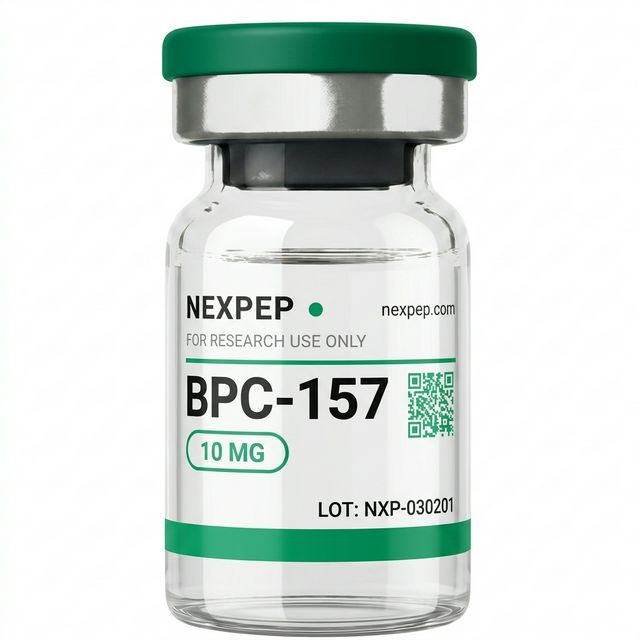
Stable Gastric Pentadecapeptide
What Is BPC-157?
A 15-amino-acid peptide fragment derived from a protein found naturally in human gastric juice.
Tendon & Ligament
The most-studied application. Published data shows accelerated healing of transected Achilles tendons, MCL injuries, and rotator cuff tears in research models. Improved biomechanical properties vs control groups.
Gut-Brain Axis
Originally discovered for its gastroprotective properties — hence "Body Protection Compound." Research documents effects on stomach ulcers, IBD lesions, and dopaminergic system modulation through gut-brain signaling.
Muscle & Vascular
Published studies demonstrate effects on muscle crush injuries, angiogenesis (new blood vessel formation), and vascular repair. The NO system interaction provides a mechanism for these multi-system effects.
20+ Years of Published Research
First published paper on BPC-157 gastroprotective effects
Tendon healing research published — Achilles tendon model
Nitric oxide system interaction documented
Comprehensive multi-system review published
First human clinical data — knee osteoarthritis study (16 patients)
Ongoing Phase 1/2 human trials in development
Published Research
Peer-reviewed studies from PubMed. Every PMID is linked so you can verify the data yourself.
BPC-157 in Human Knee Osteoarthritis
16 patients with knee osteoarthritis and meniscus tears received BPC-157. 90% reported significant functional improvement persisting beyond 6 months — the first published human clinical data.
PMID: 34324435 →BPC-157 and Achilles Tendon Healing
Accelerated healing of fully transected Achilles tendons. Improved biomechanical properties including ultimate tensile strength and functional recovery vs control groups.
PMID: 29898106 →BPC-157 and the Nitric Oxide System
BPC-157 mediates cytoprotective and wound-healing effects through the nitric oxide (NO) system. Demonstrated interaction with NO pathways across multiple organ systems.
PMID: 30427311 →BPC-157 and Muscle Crush Injuries
Systemic BPC-157 administration improved healing in muscle crush injury models. Reduced inflammation markers and accelerated functional recovery compared to controls.
PMID: 27847950 →BPC-157 Gastrointestinal Protection
Originally isolated from human gastric juice, BPC-157 demonstrates broad gastroprotective effects. Published data covers stomach ulcers, inflammatory bowel lesions, and gut-brain axis modulation.
PMID: 32578494 →BPC-157: Stable Gastric Pentadecapeptide
Comprehensive review of 20+ years of research. BPC-157 shows consistent tissue-protective effects across tendons, ligaments, muscles, gut, brain, and vascular systems in published models.
PMID: 31278800 →What to Verify Before Sourcing
BPC-157 quality varies dramatically. Here's the researcher's checklist.
Batch-Specific COA
Every batch should have its own certificate of analysis. Generic COAs that cover "all batches" are a red flag.
99%+ Purity (HPLC)
High-performance liquid chromatography confirming purity. Ask for the actual chromatogram — the peaks tell the real story.
Endotoxin Tested (LAL)
Critical for injectable research applications. Limulus Amebocyte Lysate (LAL) testing confirms endotoxin levels are within safe limits. Many suppliers skip this.
QR-Verified Results
Scannable QR codes linking to real-time batch results. If the vendor can't link you directly to third-party lab data, ask why.
Proper Lyophilization
Research-grade BPC-157 should arrive as a white lyophilized powder. Pre-mixed solutions degrade rapidly and indicate questionable manufacturing.
US-Based Operations
Same-day shipping from US facilities ensures proper cold chain handling. Know where your research materials actually come from.
Looking to Research This Compound?
NexPep sources research-grade BPC-157 with batch-specific COAs, 99%+ purity verification, endotoxin testing, and same-day US shipping.
Guide reader? Use code GUIDE10 for 10% off any order.
For research use only. Not for human consumption.
Want the Full Picture?
Download the complete 165-page research guide covering 14 compounds, mechanisms, handling protocols, and source verification.